Oil, Power, and Sovereignty: The U.S.-Venezuela Confrontation
Time: 2025-11-29 Author: Sujit Kumar Datta
The already teetering relationships between the United States and Venezuela have literally boiled over, and the scene has hit a new and even more perilous dimension. When the USS Gerald R. Ford, the largest aircraft carrier in the world, and a formidable demonstration of American might, made an important and threatening departure in Latin American waters last Tuesday. Even though the deployment represented by Washington is a necessity to stop drugs at international levels, the groundwork and the political situation of the region show that there is much more at stake than drug control. It is fundamentally a battle over oil, power, and holiness for sovereignty in the Americas.
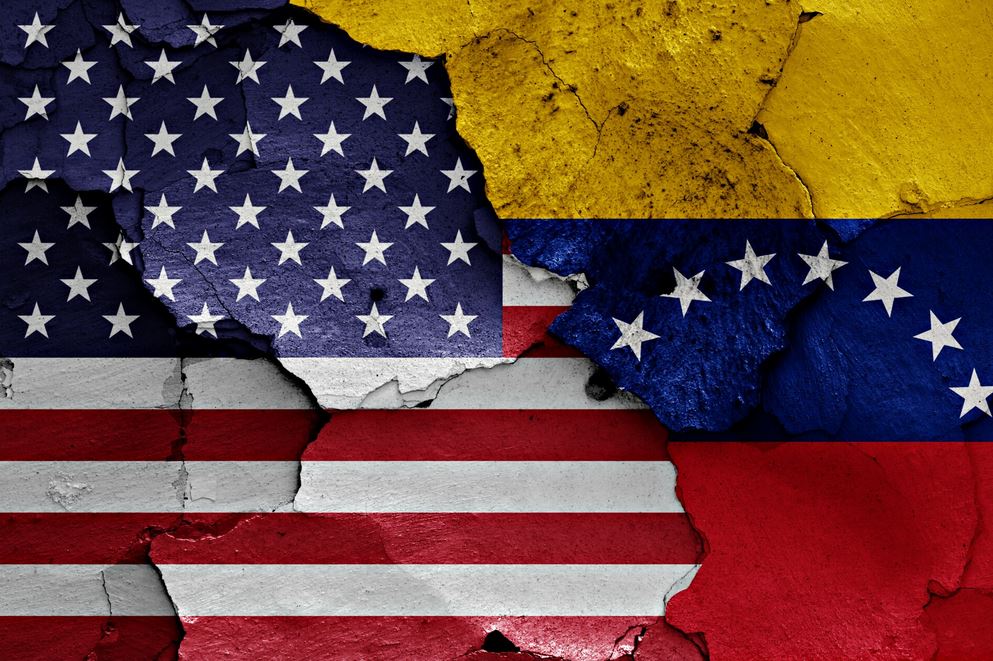
▲Photo: Collected.
The justification is that the massive ship weaponry is to annihilate the drug cartels across the lines. Actually, the US Navy has already executed operations against at least 20 suspected drug boats on the Latin coasts of the Caribbean and Pacific, which have claimed the lives of 76 individuals already. However, Venezuelan President Nicolas Maduro is categorical in his thoughts: the actual intention of such a military demonstration is to destabilise his government and arrange a change of government. It is difficult to dispute his statement due to the scale of such deployment. According to the sources in the US defense, the second aircraft carrier will soon be sailing very close to the Venezuelan waters. To worsen the situation, several warplanes are already stationed in the US-controlled territory of Puerto Rico, and six other warships have been dispatched to the Caribbean Sea, which puts the situation at the edge of a near-crisis level. The F-35 fighters, warships, and a nuclear submarine, as published by Reuters, is a firsthand agreement that it is not a regular anti-drug operation, but a wide-scope power projection that squarely points at Caracas.
The administration of Maduro has responded to it with resistance, whereby he announced a massive force deployment, and he says that a full mobilisation of the US army would undoubtedly lead to open warfare. It is the logic of an endangered sovereign nation. However, economic circumstances bring it to the level of sanctions, which proclaim its right to self-defence against what it sees as foreign aggression.
To reveal the real motivation behind this confrontation, one must go beyond the humanitarian and anti-drug rhetoric and focus on the latent strategic interests. Venezuela holds the largest known oil reserves in the world. The problem of a belligerent Venezuela, i.e., a Venezuela that does not acquiesce to the US geopolitical agreement and that instead allies with its adversaries such as Russia and China, is something Washington finds unacceptable as a breach of the hemispheric order.
It is founded on the conflict between US hegemony and Venezuelan sovereignty. The US seeks to maintain its traditional preeminent status in its own backyard, ensuring that local resources and political systems align with its strategic interests. The opposition to Maduro, a disciple of Hugo Chávez, in turn, is rooted in the right to national self-determination and the fight to escape the inescapable US political and economic pressure. The last coercion method is the use of the USS Ford, which is heavy-handed pressure to achieve a political outcome that cannot be accomplished in a few years of sanctions and diplomatic pressure.
To President Donald Trump, the Venezuelan crisis is not a foreign policy matter, but rather a domestic politics trap. He knows that his failure in overthrowing Maduro will be a personal humiliation to him. There are, however, disastrous consequences to an open military operation. After senior officials in the Trump administration realised the gravity of the situation, they held three meetings this week at the White House to discuss the possibility of taking military action. The unanimity that was declared is that the White House should be highly doubtful of its ability to bring sanity to Venezuela without exposing the US soldiers to an all-out war. The desperation may be felt: the civil war that would follow the military intervention and the resultant civil war would be a river of blood, which would hold the US President accountable.
Although the Senate failed in its endeavor to limit the President’s authority in waging war, the President ultimately has the final decision to make. His current formula of balance between military bullying of the enemy and precision operations has yet to yield the desired results. He is also torn between the political need to be perceived as tough and the terrifying fact that the escalation process may culminate in a geopolitical disaster that cannot be reversed.
Above all, the US military build-up has already created an inferno of criticism in Central and South America. The regionals have been viewed as a blatant opposition to a historical accord due to their military posturing. Later that year, a block of 33 countries (the US is not a member) formed the Community of Latin American and Caribbean States (CELAC), which termed the region a Zone of Peace. This statement is entirely contradictory to the military presence in the present age. It is quite correct when Cuban Foreign Minister Bruno Rodriguez Parrilla said that the US presence is a provocative act that threatens the self-determination of our people. The same is reflected in the high-profile regional leaders, such as Brazilian President Luiz Inácio Lula da Silva and Colombian President Gustavo Petro, who have both been vocal against US attacks and military fortification. This backlash suggests that Latin American states are no longer satisfied with Washington’s unilateralism, but are instead firmly pursuing the doctrine of non-intervention and sovereignty.
To complicate the matter even further, the US-Venezuela dispute is already being drawn into the larger geopolitical conflict between global powerhouses. It was highlighted by the Venezuelan President Maduro, who alleged that the Trump administration was launching a new perennial war in the region, a war that he is prepared to retaliate with an epic mobilisation of his own soldiers. Foreign player intervention is very obvious. One such case is the study by Chinese scholars of the Russian strategy in Venezuela as a case of Hybrid Power Projection in the American traditional region of influence. It means that oil and the future of Venezuela is not an up or down affair anymore, but a proxy war whereby Moscow and China are attempting to intimidate the hegemony of the US and ensure that the crisis is not resolved to the satisfaction of the strategic antagonists.
A nuclear submarine carrying F-35s to the doorstep of Caracas would be a desperate gamble. It is not a battle of drugs, but a definitive battle over who will possess the vast resources and political future of the Western Hemisphere. Military training can only turn the Caribbean Sea into a battlefield, destroy the region’s tradition of peace, and plunge an already impoverished country into the depths of disaster. The avenue out of this fast-growing confrontation that can be offered is supported by international pressure and diplomacy.
This article was first published at Times of Bangladesh, Bangladesh, November.18, 2025,
https://tob.news/oil-power-and-sovereignty-the-u-s-venezuela-confrontation/.
