

Admiral Jayanath Colombage Delivered Keynote Speech at Australia Awards Fellowship
Time: 2026-10-22 Author: RCAS
Australian National Centre for Ocean Resources and Security (ANCORS) together with Pathfinder Foundation conducted Australia Awards Fellowship- in-country programme in Colombo, Sri Lanka from 17th to 20th October 2026. ANCORS was represented by Prof Michelle Voyer, Australian Research Council Future Fellow on University of Wollongong. The chief guest on the opening session was His Excellency Mathew Duckworth, Australian High Commissioner in Sri Lanka. The welcome address was delivered by ambassador Bernard Goonetilleke, the Chiarman of Pathfinder Foundation in the presence of the founder of Pathfinder Foundation Mr Milinda Moragoda. There were participants from Sri Lanka, Bangladesh, India, Indonesia and Australia.
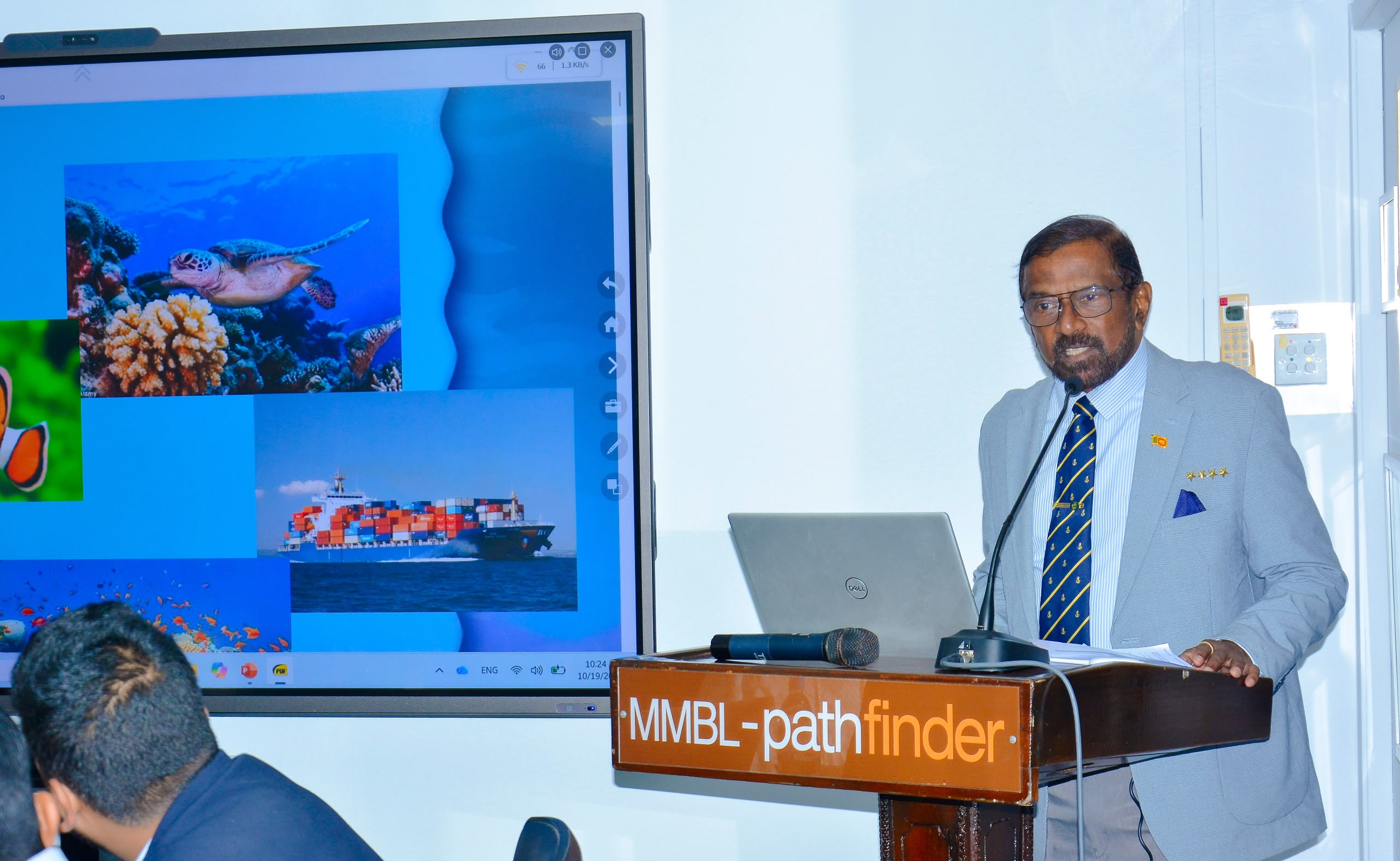
The opening session focused on ‘Enabling a Sustainable Blue Economy in the Bay of Bengal Region’. The keynote address was delivered by Admiral Prof. Jayanath Colombage who is a Non-resident Senior Fellow of Hong Kong Research Center for Asian Studies. The title of Admiral Colombage’s presentation was “Sri Lanka’s Blue Economy: Opportunities, Challenges and the Maritime Security Nexus”. Admiral stated that Sri Lanka only has 65000 square kilometres of land and 1400 kms of coast line. There are number of rivers flowing into the ocean bringing large quantity of sediments. These sediments provide sea-bed minerals, and food for marine species. Sri Lanka possesses considerable potential across several sectors of the Blue Economy.
Highlighting the advantages for Sri Lanka’s Blue economic potential admiral Colombage highlighted that Sri Lanka is blessed with deep waters around its coastline because it sits near the edge of a stable continental shelf that drops off rapidly into the deep abyssal plains of the Indian Ocean, hence deep-water ports and navigable water around the country. Sri Lanka's location close to the major East–West maritime trade route gives its ports a natural geographical advantage. Colombo has developed into an important transshipment hub, while Hambantota and Trincomalee offer additional possibilities for logistics, energy, industrial development and maritime services. Port of Colombo is the 20th best-connected container handling port in the world and the best in South Asia. Sri Lanka has always been a Maritime Nation and played a key role in Indian Ocean Trade as an Emporium in the Maritime Silk Route. Furthermore the waters around Sri Lanka is having abundant of fish and coral reefs.
Admiral stressed that Maritime Security Environment, which is a must for a country to derive the potential of Blue Economy is changing rapidly for worse. Traditional threats such as geopolitical competition are continuing but they are increasingly accompanied by new and more complex risks. We are witnessing: attacks on commercial shipping; disruption of major sea lanes; maritime terrorism; narcotics trafficking; cyber threats; threats to critical maritime infrastructure; illegal exploitation of marine resources; environmental degradation; and the increasing use of unmanned systems. Recent disruptions in the Red Sea and around major maritime chokepoints have demonstrated how quickly geopolitical conflicts can affect global shipping and energy markets.
Admiral Colombage stressed the importance of collaborative and inclusive working arrangements to enhance maritime security and to protect the marine environment. For Sri Lanka and other countries in the Bay of Bengal, the task is to bring these two agendas together. For Bay of Bengal Blue Economy and maritime security should not be treated as separate policy domains. They are two sides of the same maritime future. If the region can successfully integrate economic development, maritime governance, environmental sustainability and maritime security, the ocean can become not merely a strategic asset, but one of the principal foundations of the region’s long-term prosperity.