Xi's Bold Defiance of the US-led Order
Time: 2026-01-02 Author: Sujit Kumar Datta
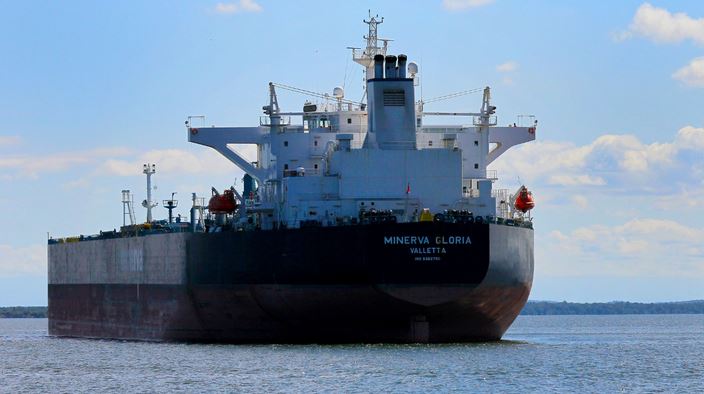
By 2025, the Caribbean Sea will be a high-stakes arena, haunted by the phantoms of the Cold War, butting into the cold arithmetic of 21st-century multipolarity. Only recently, when U.S. President, Donald Trump, ordered an entire and complete naval blockade of all the approved oil tankers in Venezuelan waters, all were taken to the brink of a full-scale war. It is the most significant effect of this maritime blockade, which is not felt in the waters off Caracas but in Beijing’s diplomatic channels. Following his repeated support of the Russian President Vladimir Putin, Xi Jinping has now extended the umbrella of strategic protection to the Venezuelan President Nicolas Maduro, another claim of arrogance against the world system led by the United States, spearheaded by it.
▲Photo: Collected.
The current Trump administration campaign is the biggest in terms of its military nature. The U.S. naval presence has ceased being a deterrent because it is now fatal, just as the President claimed that the U.S. maritime presence constituted the largest Armada it had ever used against South America. A prolonged air and marine campaign against believed drug-carrying vessels has claimed at least 104 lives since September 2025, with five of them being killed in two boats just a few days ago in the Pacific Ocean.
It is the combination of national security and humanitarian interests that Washington cites in support of this iron fist solution. Trump has officially declared the administration of Maduro a Foreign Terrorist Organisation (FTO) and criminal cartels, including the Cartel de los Soles and Tren de Aragua. The rhetoric of the White House is red hot: Trump accuses Maduro of emptying his prisons and insane asylum to bring a migration crisis to the U.S.; a migration crisis that has already seen nearly 8 million Venezuelans not just leave their home country but also become actual migrants. The blockade of Trump is an obligatory step to stop the fentanyl and cocaine, which he alleges is led by Maduro to finance the regime of killing and kidnapping.
Beijing has behaved like the stabiliser of last resort with this so-called grotesque threat that the Venezuelan government has characterised it as. On December 17, 2025, Chinese Foreign Minister Wang Yi called his counterpart, Yvan Gil, and made a significant call. Though the Chinese official statement specifically avoided referring to President Trump or the United States, the message was still evident. According to Wang Yi, China firmly opposes unilateral bullying and pressure, and every state has the right to safeguard its sovereignty and honor.
This help, however, is cloaked with strategic ambiguity. Though Beijing has promised to support Caracas, it has not specified the type of assistance it will provide. Whether it will be financial help, satellite intelligence to avoid being blockaded, or even naval escort of its tankers is the question. This is a complex and developing game that the world is waiting to see what will happen next.
Defiance is not only an ideological problem but also grounded in economic survival in China. Beijing is the world’s leading importer of crude oil from Venezuela. This may be a slight percentage of the total oil imported in China. Still, it is the same percentage, approximately 85 percent of total oil exports in Venezuela. Energy flow is not something a country as energy-hungry as China can compromise.
The other issue between the two is the legacy of loans-for-oil, which cemented the relationship. Through crude shipments, China has been able to provide the Maduro regime with billions of dollars in services over the years. If Maduro is overthrown and a U.S.-backed government is installed, which will repudiate these so-called odious debts, Beijing would lose its massive investments and one of the links in its energy security chain. During Xi and Maduro’s visit to Moscow earlier this year, the two discussed the growth of this cooperation, and this aspect is one of the reasons China sees Venezuela as a long-term strategic base in the Western Hemisphere.
Despite this boastfulness, Xi Jinping is walking on thin geopolitical ice. The largest trading partner of China is the United States, which already has a poor relationship with China due to ongoing trade disputes and technological rivalry. The existence of a military conflict in the Caribbean would disintegrate the already weak Chinese economy, which is still recovering from its shaky domestic recovery.
This is what makes the rhetoric in China count. By wrapping a case of their support in a defense of the sovereignty and the law of the international community, Beijing is targeting the broader Global South as the sensible alternative to what they assert is American aggression. It is a tale that reverberates in Moscow, where Vladimir Putin has also shown support to Maduro, and where the all-powerful Beijing-Moscow-Caracas axis is established.
The current crisis is not merely a localised conflict but a fundamental, long-term strategic challenge to the world order. In the instance of the U.S., it has the mandate of re-enforcing the Monroe Doctrine and stamping out the perceived narco-terrorist threat on its front yard. In this instance of China, it is to show that it is no longer unipolar- that the shadow of the dragon can even fall upon those in the middle of the Americas.
As the number of those dying at sea and also the number of armadas, the world is in a life-generating break in diplomacy. The fact that Xi Jinping is on Maduro’s side indicates that the no-limits partnership with Russia remains intact. It is sending a message to China that the FTO’s position in the U.S.’s backyard has altered the rules of the game. The question now is whether Washington will make the additional step on its blockade, or whether the menace of a new Vietnam in the Caribbean, such is the new menace of Maduro, will prompt Washington to a strategic retreat. It is another matter that the age of unquestioned U.S. hegemony in the Western Hemisphere has eventually discovered its most formidable rival.
This article was first published at Times of Bangladesh, Bangladesh, December 23, 2025,
