

Trump's Security Strategy and The Fragile Global Order
Time: 2025-12-18 Author: Sujit Kumar Datta
The National Security Strategy (NSS) of the Trump administration is a drastic departure from the current foreign policy paradigm of Washington. The new NSS does not even speak the term strategic rivalry in comparison to the first Trump administration and the Biden administration that openly discusses massive power rivalry with China and Russia. Instead, it is not that aggressive and more amenable to the established players in America. Geopolitical competition, financial destruction, and the decay of norms and the effect of this type of rhetoric and conceptual change are already weakening the world order, and the impact of the latter is catastrophic.
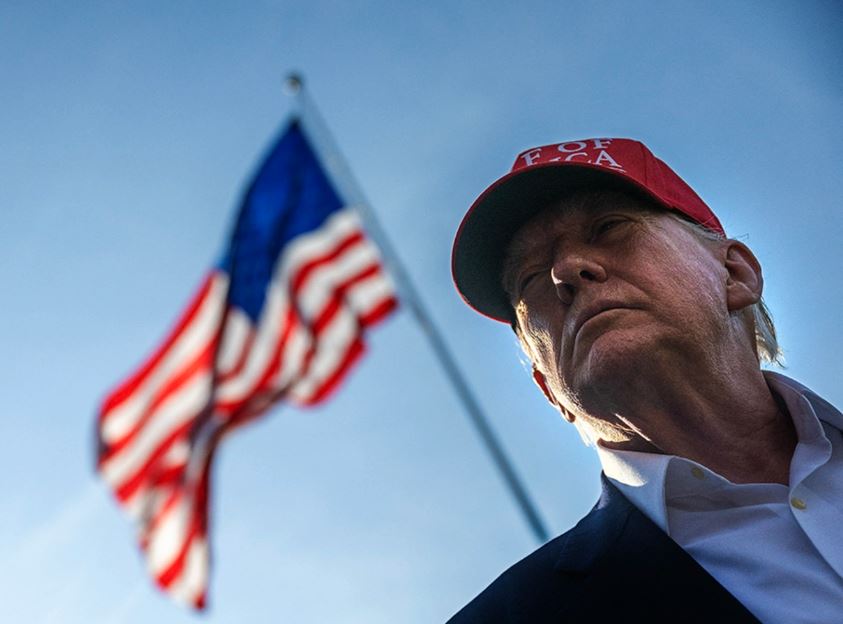
▲Photo: Collected.
The previous formulations positioned China and Russia as revisionist states that sought to foster values and interests that were contrary to those of the U.S. China was a pacing threat in the long run. Russia, in its turn, was a serious menace, offensive and subversive. It was a tactical reason that this form of framing had firmly established blocs and polarised them further. Comparatively, the top power rivalry is not referred to at least once in the new NSS. It does not refer to the regulation of European relations with Russia, and to the renewal of economic contacts between America and China.
It is understandable that such a rhetorical transformation may be reasonable. More and more commentators have warned that great-power rivalry has been overestimated and that its existence can create the self-fulfilling prophecy of states being caught in an escalatory spiral where states are allied with limited space in their actions. It is the redrawing of power and position of the new United States in the world that is more radical than the way the new NSS proposes it.
According to the document, the imperialist domination of the larger, wealthier, and more powerful countries is an ancient reality of world relations. It is upon this that it is not in agreement with the so-called unfortunate idea of global domination, but a proclamation of global and regional balance of power. It is a hideous transformation of allies and other states who have been relying on the American pledges on norms and institutions.
This theoretical movement will be able to give the answer to the question of how the NSS became so preoccupied with domestic affairs. The plan focuses on the Western Hemisphere, trade, and migration as well as the economic power of the country rather than an unnatural interest in the self-esteem of civilisation in Europe. This case does not show that security is in distant theatres and ideologies, but in cash and possession of your locality. This means that the flashpoint in Taiwan and NATO continues in the long-term and not in the short-term. Pledges are not particularly set aside. Not so firm, but still, does the greater strategic reason of those commitments.
It is fascinating, particularly taking into view the Western Hemisphere orientation. Not only does it resemble the Monroe Doctrine, but the NSS also presents what critics say is a Trump Corollary to it: a neo-imperialist assertion in America. The United States has already been predicted to hold special privileges and burden in this region, and that was not repentant for what it did in the past. This can be given out to the domestic audience who would desire a more contested assertion of sovereignty and authority. At the foreign level, though, it will be kindling up ancient enmity. The U.S interventionist history in Latin America has been traumatising, and any move to exert overt power will be a disgrace to the image of the soft power known as Washington in its backyard.
There are risks, however, with the economic-first approach of security. To minimise the stabilising functions of institutions, alliances, and similar norms, the United States can decline the national interest by renegotiating the national interest to focus on the balances in trade and domestic economic benefits. Economics is not only inadequate to support the world order, but it is also founded on predictability, trust, and collective regulation. A transactional type of relationship that is based on the premise of instant economic compensation would dangerously eradicate the relationships in the long term and encourage hedging amongst the allies.
It also raises doubts about the fact that the NSS is not that harsh on Russia. The challenge itself is presented as based on the European relations with Russia, which suggests that it is willing to address Moscow as a regional power with justifiable interests and not a systemic intruder. This language may be pushed to its extremes as well in the conformity in the ears of certain European nations, the eastern side of NATO primarily. Despite being a decent concept, de-escalation may also add to the ambivalence of the will to decide according to the U.S., or demand that the regional powers receive an assurance of their safety beyond the U.S. borders.
The Trump administration’s approach to security, collectively, has the effect of sounding like a more frankly realist approach, less apprehensive of power relations, less concerned with internal relations of inequality, and less anxious about general norms. It is too new in the history of the American nation and a severe contradiction of the post-cold war orientation of the liberal order and the head of the world. It is not only the content of the strategy that is taken on board; the content of the strategy is also dangerous, as it does not explicitly discuss the great power rivalry. Loss of structural reality that characterises the modern international system poses a threat to the NSS. It does not use the same name without addressing it as such since it no longer is the competition.
Lastly, the Trump security policy does not reflect the United States looking after the world in mourning and reasserting control of the home front and recapturing the economic advantage in material terms in other countries. Whether such a course of action will result in any stability or quicker disintegration remains to be seen. What is clear is that the already tense international system will be left with no option but to change in order to incorporate an America that will no longer be interested in spearheading the global system in the same manner.
This article was first published at Times of Bangladesh, Bangladesh, December 16, 2025,
https://tob.news/trumps-security-strategy-and-the-fragile-global-order/.
