
Russia-Ukraine Peace Deal: A New Beginning for European Security?
Time: 2025-12-02 Author: Sujit Kumar Datta
Even a non-perfect, naturally unsatisfactory outlook on a peace agreement between Russia and Ukraine has sparked a heated debate in Western capitals. No one is saying that the situation being placed on the table is fundamentally unfair: Ukraine, as an independent country being forcibly invaded, might be forced to make definite trade-offs in territory and politics with the invader. This type of outcome is psychologically torturous and tactically unnerving. However, this bloodshed reaction across Washington itself to the new peace movements can be used to express an American paradox: an incapacity to compromise and to yield less than perfect justice, in which additional warfare can do no better in terms of casualties. This break is manifested in the outcry over the 28-point proposal from the Trump administration, which was instantly labelled capitulation. What critics failed to realise is that the deal gave Kyiv something it had never experienced before: a strategically safer future, militarily capable and closer to the West than at any time in its history.
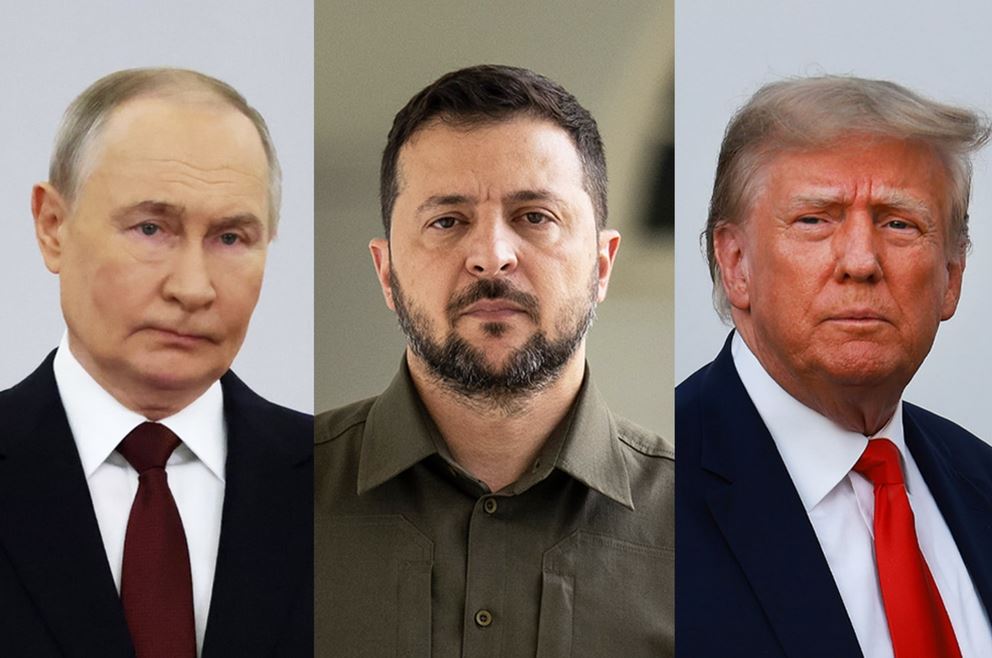
▲Photo: Collected.
Under the proposed conditions, Ukraine would not have an actual limit on its peacetime military force, which is a significant win given that Russia consistently aims to keep its forces at a minimum. It should not have been capped at 600,000, as such a figure is by no means a constraint; rather, it would have been far more than Ukraine would retain in the long term. Even better, both the United States and Europe would ensure that Ukraine is provided with security never seen before. It would be the best package of security guarantees Kyiv has ever had, and the balance of power would change radically in Russia’s favour, but not to the point of the entire NATO mutual-defence obligation. This would make Western military and political support official and would make Ukraine feel better than before the 2022 invasion.
In practice, Vladimir Putin’s invasion was an effort to interfere with Ukraine’s westward orientation; a peace settlement built on such values would do the opposite. Ukraine would emerge better integrated into the Western security system, stronger militarily, and even more aggressive towards Moscow than ever before. The geographical positioning of Russia, whether or not it acquired territories, would be undermined in the long run. This is lost to the absolutist rhetoric that reigns in Washington. The Republican hawks and the Democratic hawks all take the view that failure to defeat the Russians except in a total defeat is surrender. The compromising efforts by senators like Mitch McConnell and Jeanne Shaheen approach the undermining of global norms without regard for the ugly truth that they want perfection, leading to further destruction and worsening the endgame, as Ukraine will never be able to win the war in its entirety.
Ukraine has found itself on a cliff between the idealism of morality and the material world. Probably, an extension of the war would lead to a smaller, weaker, and more broken Ukraine. This is not pessimism; it is the reasoning of attrition. In Kyiv, the demographic casualties, the economic crippling, and exhaustion of the battlefield are accruing. The West, however, is not aware of how it can be sustained in the long term due to political polarisation and global crises. It may sound pious here at Washington, it may sound pious here in London, it may sound pious here in Brussels, to call out that entire world to a full throttle in demand of complete justice, but the human cost of complete justice is paid by Ukrainian rubble, by Ukrainian loss of life, by Ukrainian inability to protect themselves.
This is the attitude behind it. Since time immemorial, the US has misunderstood the meaning of the war it is fighting, and has been unable to accept an imperfect outcome. In Vietnam, when Washington refused to acknowledge defeat, Richard Nixon took the war four years further, throwing Cambodia and Laos into covert bombings, vainly attempting to give a false peace with honour. The result was catastrophic: hundreds of thousands of dead people, destabilisation of the situation in the Southeast Asian region, and finally, collapse, which could not be deferred. On the same note, in Afghanistan, each administration that followed the others was unwilling to accept that it could not win. The war was fought year after year because the end was not possible, but because the leaders feared the political price of facing the truth. The result was a prolonged, more humiliating, and demeaning withdrawal.
The United States is today at risk of repeating two mistakes. Failing to accept an imperfect victory and failing to acknowledge the weaknesses of its military might. This means that, in the case of Ukraine, Washington is also unable to define success in an absolute way. The fact that the peace agreement leaves Ukraine independent, with weapons and becomes more pro-Western is not a loss but a tactical victory in a world where justice cannot always be perfect. The Europeans would see the Russia-Ukraine accord on peace, if rooted in a sound security guarantee, as the beginning of a new era of security in Europe. Europe has been fractured in its perception of a post-Cold War order of institutions, law and interdependence. The invasion of Ukraine revealed NATO structural weaknesses, the inefficacy of hard power deterrence, and the strategic oneness of the EU. Crisis is a change-bringing. A deal that would entrench Ukraine’s western orientation would see Europe build the security it has been neglecting.
The very fact of the war has already hastened defence integration, increased discussions of military budgets, and raised the issue of autonomous deterrence capabilities. First, institutionalisation of these changes could be achieved through a post-peace-settlement environment that would enable Europe to do so. Second, Ukraine’s integration into the European security system, encompassing defence, arms assistance, and long-term strategic coordination, would reorganise the continent’s geopolitical landscape. Safe Ukraine is a buffer, a partner and a pointer of European strategic resilience. Third, the stabilised Eastern Europe will allow the EU and NATO to reallocate their efforts toward emerging issues: countering hybrid threats, managing migration pressure, ensuring energy security, and increasing China’s presence in European territories. The peace settlement may be the place of departure for a more realistic, more consistent European security order, which accepts the world as it is, not as Western idealists would have it. People often confuse compromise and appeasement, even though the two are distinct. An enemy gets strength through true conciliation, and a duly constructed peace settlement can bind him. Russia would gain a territory that would be lost forever in Ukraine. It would look less promising in the long term, more strategically vulnerable. It would have an enhanced Western alliance against the discomfort of reward to stabilise Europe and prevent the collapse of Ukraine.
This article was first published at Times of Bangladesh, Bangladesh, December 2, 2025,
https://tob.news/russia-ukraine-peace-deal-a-new-beginning-for-european-security/.
