

Sudan's Tragedy Exposes Africa's Failing Peace Architecture
Time: 2025-11-29 Author: Sujit Kumar Datta
The capture of El Fasher by the Rapid Support Forces (RSF) last week led to the killing of hundreds of Sudanese civilians; another sad reality was placed in the spotlight once again that Africa can no longer afford the luxury of ignoring. The peace and security infrastructure of the continent is starting to fail its citizens. What is happening in Sudan is not merely a civil war between two warring generals, but the institutional collapse of a state as a result of the fact that it is becoming weaker internally and is being played with externally. Sudan is disintegrating, and yet Africa, more so, must contend with its own inability to check a tragedy that says much about the natural vulnerability of the regional systems of regional peacekeeping, mediation, and collective security.
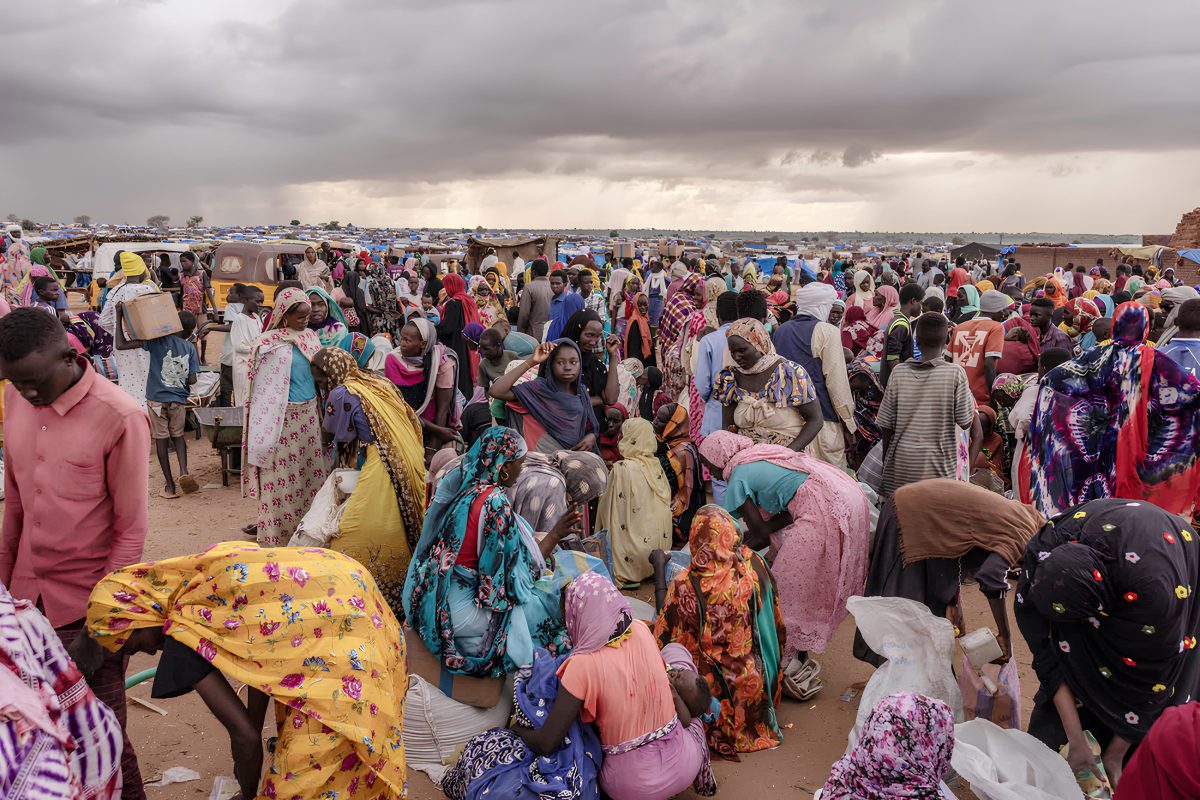
▲Photo: Collected.
On October 26, the RSF seized control of the city of El Fasher in Darfur and ended an 18-month siege that had already reduced much of that city to rubble. They were initiated with the murders in the aftermath. Whole communities were displaced by civilians who were attempting to escape the war that had already claimed over 150,000 lives and had been ongoing for the last two and a half years. UN calculates people displaced internally to be more than 9.5 million, the biggest in the world, with another 4.3 million refugees spilling into Chad, South Sudan, Egypt, and others. All this goes to the extent of the displacement of one out of four Sudanese. The International Organisation of Migration indicated that more than 81,000 people have escaped El Fasher alone since its capture, mostly on foot.
Sudan’s geography is such that it is one of the desired regions by both regional and world players. It possesses nearly 500 kilometres of coasts stretching along the Red Sea, rendering the country susceptible to maritime commerce, considered most important worldwide. It boasts of numerous gold reserves, good agricultural fields, and the supremacy of the Blue Nile; a crucial resource for those who desire to possess economic and political influence in the Horn of Africa. The intervention of the foreign powers in the Sudanese turmoil has implicated the countries in the United Arab Emirates and those in Egypt, Russia and Saudi Arabia, among others, to various degrees. The UAE has been accused of supplying weapons and money to the RSF, and Egypt has provided its support to the Sudanese army. Meanwhile, the Wagner Group in Russia has enjoyed historical relations with the Sudan militia, accessing the gold mines in the state. These external actors are all pursuing selfish interests at the cost of Sudanese citizens.
This is what the African Union (AU) had been boasting of the Peace and Security Architecture (APSA) to prevent. All the above were aimed at making the principle of providing African solutions to African issues meaningful, in that the African Standby Force, the Peace and Security Council, and the Panel of the Wise were to be the embodiment of the same. However, as in Libya, Ethiopia, and the Sahel, such edifices have been vacant. Since the start of the fighting in April 2023, the AU has already conducted numerous emergency conferences and issued countless communiques – but that is all. It has compromised its mediation processes due to a lack of cohesiveness among the member states and by the other regional bloc called the Intergovernmental Authority on Development (IGAD), which also claims Sudan. It has resulted in redundancy, confusion, and a lack of political determination. Also, to the surprise of the carnage of war, are the weaknesses of Sudan in the environmental and humanitarian parameters. The condition of climate change has been at the forefront of the country, and it has had its quota of radical droughts and even killer floods. The tragedies have devastated harvests, displaced nomadic people, and augmented food insecurities with the war aggravating these pressures by destroying the supply chains and annihilating the little infrastructure that sustain the rural livelihoods.
To the outside world, Sudan is not a humanitarian problem but a chess piece. The Red Sea route that connects the Suez Canal and the Bab el-Mandeb Strait is regarded as very important regarding world trade and transfers of energy. Controlling the coastline of Sudan equals influence both on Africa and the Middle East. The level of territorial superiority war with multiple layers has transformed the war into a battle for ports and resources of Sudan among the Gulf states, Russia, and the Western powers. The weapons that the UAE is accused of importing to the RSF are said to be motivated by the desire of the country to showcase the military presence of the Red Sea. Moscow has always been concerned with the presence of a naval base in Port Sudan, which would enable the country to have access to the warm water and would give the government a counterweight to Western influence. This geopolitical crossfire has been at the cost of the people of Sudan, and has not demanded much intervention from outsiders, even though they seem to have no interests in the war. The African states also must manage their diplomacy and not struggle for influence. The duplication of the efforts of the AU, IGAD, and the domestic one is projecting the African voice and weakening its authority. It is necessary to have a unique and exclusive unitary mediation framework by African leaders with the help of external partners, without bias.
Suffering in Sudan is not an isolated one. It is part of a bigger pattern, the decline of state authority, the emergence of militias, the global intrusion into the Sahel to the Horn of Africa, is now the order of the day. The most recent epitome of this corruption is the massacre of El Fasher. Africa cannot tolerate such atrocities, and that is why the dream of unity and self-sufficiency of the continent cannot be in vain. The African Union was formed due to the legacies of colonialism, with the assurance of collective security and unity. The pledge has never been tested like it is now. The war in Sudan is a metaphor of the war on the African conscience. It portrays a continent of capabilities, but of low resolve, a continent which must either reform its peace system, or proceed to lose further of its peoples to anarchy. The silence has been broken. Something must be done about Africa, or Sudan must be remembered in history, not as a tragedy, but as a lesson.
This article was first published at Times of Bangladesh, Bangladesh, November.11, 2025,
https://tob.news/sudans-tragedy-exposes-africas-failing-peace-architecture/.
 <RCAS Commentary-Sudan’s Tragedy Exposes Africa’s Failing Peace Architecture>