

Trump-Xi in Busan: US-China Coexistence in the Strategic Rivalry
Time: 2025-11-29 Author: Sujit Kumar Datta
The future of U.S.-China relations has sparked a fresh wave of conservative optimism with the pending summit between U.S. President Donald Trump and Chinese President Xi Jinping at the Asia-Pacific Economic Cooperation (APEC) summit in Busan, South Korea. It was also the first physical contact between the two leaders since 2019, when they reached an agreement to halt the ongoing trade war between their countries, which had caused a commotion in the global economic sphere and heightened tensions between the two most powerful states in the world. The so-called Busan Truce, as many are calling it, is not a peace treaty in the economic sense, but a ceasefire that seeks to buy time. The fact that the two leaders had already decided to escalate the tariffs when the time came is encouraging and suggests that there is no eagerness to restore some sanity. Trump, in his flamboyant manner, hailed the meeting as a 12 out of 10 successes. Xi, in his turn, was more moderate and demanded additional conversation and realistic cooperation. It is a classic example of asymmetry, which defines the current relationships between the United States and China, where Washington seeks to achieve visible triumphs. In contrast, Beijing seeks to achieve its long-term objectives.
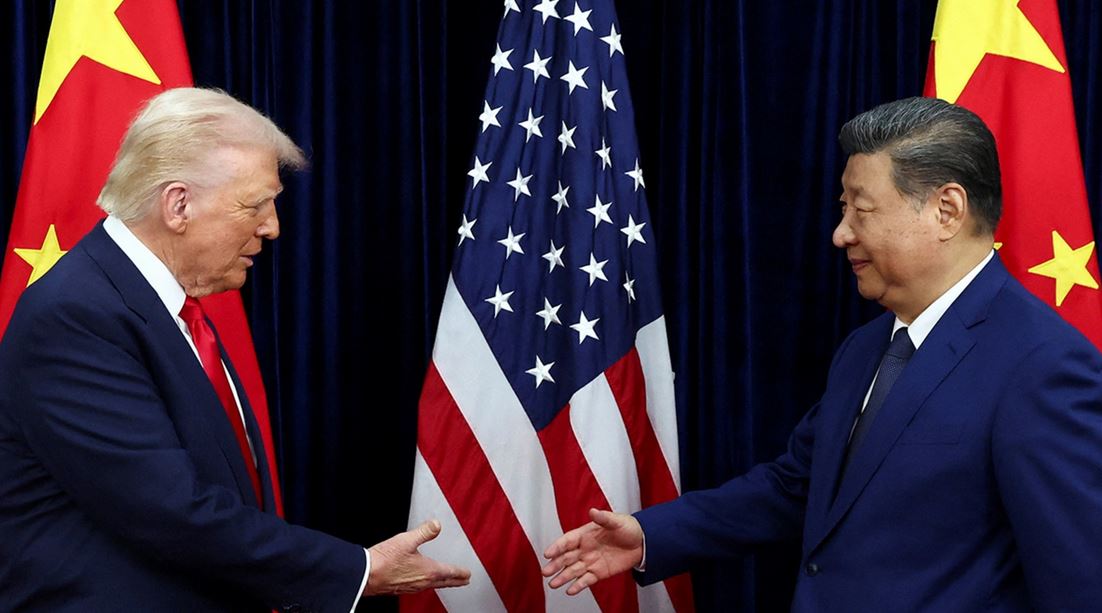
▲Photo: Collected.
The treaty of Thursday is preceded by years of struggle that ensued due to higher tariffs and technological limitations, making it a rare diplomatic success. Washington has already agreed to lower some of the tariffs it imposes on Chinese imports, as indicated by certain statements made afterwards, and Beijing has removed its policy of banning exports of rare earth minerals, raw materials used in smartphones, electric cars, and other high-tech military equipment. These concessions are not token gestures. The rare earth minerals have also been employed as a bargain in the current technological competition between the two superpowers. Restricting their exports to China would be highly risky to the industries in the United States, as China is the world’s largest producer. The lifting of the export controls is a positive indication from China that it is not interested in further aggravating the situation, at least in the short run. In the meantime, the U.S. move to reduce tariffs indicates that it is not surprising that American consumers, along with American industries, have become the losers to the same extent, as Chinese exporters have been the victims in the long-term economic confrontation.
Trump is in a state of coexistence with China, which is founded on strategic competition rather than collaboration. Beijing has become an adversary and a compulsory opposite to his government. The United States is unable to fully disentangle itself from China and disrupt the global supply chains. However, it is unwilling to relinquish control of significant technologies, such as semiconductors and artificial intelligence, to China. Thus, Trump is practical regarding the suggestion to put the trade war on hold, which is not an ideological compromise. The optics, too, in this instance, are essential, but they are presented in a different way to Xi Jinping. The state media in China described the meeting as a move to demonstrate China’s maturity and readiness to cooperate in a win-win manner.
The strategy of Beijing is long-term, whereas that of Trump is focused on achieving short-term results. This patience is evident in the fact that China recognises it cannot outwit the U.S. in the short term, whether through military or economic means, but can outlast the Bush administration by maintaining a steady state and focusing on gradual gains. Its initial statement was diplomatically humble, with attention directed at the need for negotiation and follow-ups. Later, a larger leakage was indicative of what Trump alleged to mean, suggesting there would be a moment of congruity in message but not necessarily in objectives. The recent policy of Beijing has been focused on preserving economic sustainability and strengthening its position through initiatives such as the Belt and Road and the BRICS economic system. The Busan truce would give China time to continue gearing its economy towards domestic consumption and sufficient technology. It can also be used to normalise relations between Washington and the South China Sea, as well as in the air over Taiwan, which might provoke uncontrollable situations—the problems in which tension remains too high.
The Busan truce initiated a new golden age despite the rhetoric being jovial. Instead, it is a strategic pause until what is likely to be a long strategic rivalry. The battle on the structural level, founded on economics, political ideals, and security interests, remains unsettled. The United States continues to view China’s rise as a threat to the liberal world order. At the same time, China considers American dominance an obstacle to the country’s legitimate presence in the global arena. Thus, the coexistence of the two powers will not mean peace, but rather the balancing of war at acceptable levels. The Busan gathering, in this respect, is not concerned with the ending of the trade war, but rather with establishing the rules of action for the future. The two parties understand that decoupling cannot be done well. Instead, they are moving to a new paradigm of competitive coexistence, characterised by a rivalry that is accompanied by selective cooperation. World politics is likely to be affected by this model for decades to come. The Trump-Xi truce is a temporary salvation for other nations. The international markets responded favourably, and some of the Asian economies that were heavily dependent on trade between the U.S. and China celebrated the declining tensions. The question remains, however, how long such a peace will last.
It has made the world quite cynical about so-called summit diplomacy, which provides temporary breakthroughs but does not alter the fabric. The waves of great power struggles are not easily reversed, and that is how history has manifested itself. However, even such a small ceasefire is of international significance, as it demonstrates that communication, despite its imperfections, can still occur.
A Trump-Xi meeting in Busan is an eye-opener, showing that coexistence is not a matter of friendship, but rather a balance. Both leaders are in the process of breaking up and not being reversed. They are attempting to protect national interests, rather than being drawn into catastrophic conflict. China and the U.S. must be friends and collaborators, as Xi has aptly quipped. That is the history has taught us, and that is what reality teaches. The friendship in this case, however, is not based on trust, but rather on coexistence out of necessity. The coming months will determine whether the Busan truce can be expanded into something bigger. It will hinge on whether the two parties can translate symbolic gestures into actual policy changes. However, meanwhile, in a world weary of geopolitical turmoil, a low degree of peace between Washington and Beijing is to be celebrated.
This article was first published at Times of Bangladesh, Bangladesh, November.4, 2025,
https://tob.news/trump-xi-in-busan-us-china-coexistence-in-the-strategic-rivalry/.
 <RCAS Commentary-Trump-Xi in Busan: US-China Coexistence in the Strategic Rivalry>