

Geopolitical Stakes in the Afghanistan-Pakistan Crisis
Time: 2025-11-29 Author: Sujit Kumar Datta
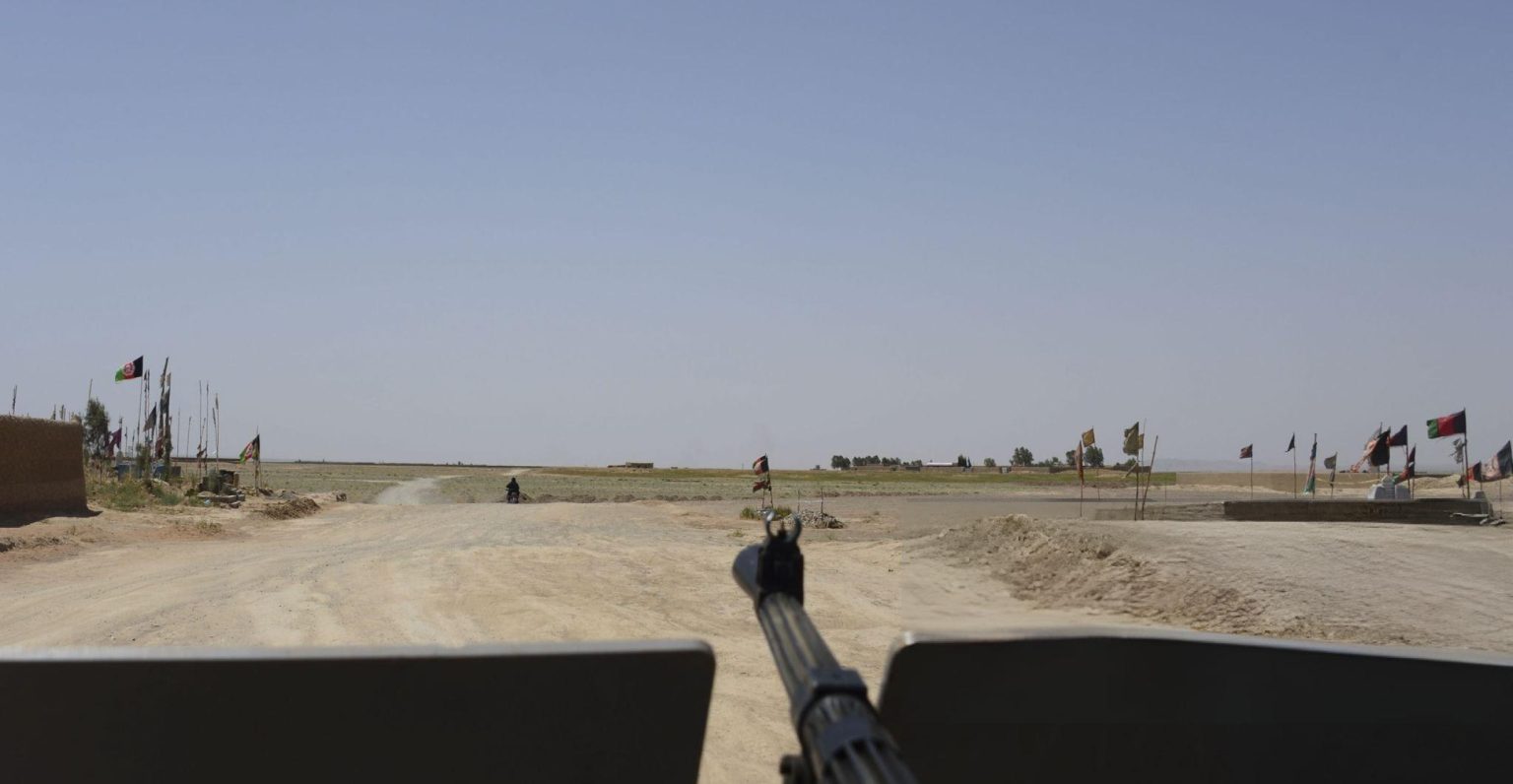
It was October 2025, a bleak and ominous turning point of an already hostile relationship between Afghanistan and Pakistan. What had begun as a low-profile intelligence problem, solved by porous border controls and silent diplomacy, turned into open military action. The proclaimed airstrikes of the Pakistani Taliban command, in large cities of Afghanistan on October 9, Kabul, Khost, Jalalabad, and Paktika, and the subsequent devastating, fatal retaliation of the Afghan Taliban on Pakistani military posts across the border mark the catastrophic failure of the Pakistani strategic calculations of 2021.
▲Photo: Collected).
The truce that was soon to be negotiated with the United Nations, compelling the need for a permanent ceasefire, is a temporary relief. It is not merely a local border conflict. However, an extremely distant geopolitical crisis has exposed Pakistan’s underlying security vulnerabilities, threatened China’s regional ambitions, and given India a perfect opportunity to engage in a brilliant diplomatic juggling act. The stakes are titanic; the safety of the Eurasian heartland depends on the ability to withstand the new phase of open conflict.
This outcome was a triumph in the Pakistani military and political community as the Afghan Taliban came back to government in August 2021. The Taliban government was believed to be led by fraternity, which would be used as a deterring factor to any security threat that was not within the country, especially to the TTP. The idea of strategic depth has turned into a fiasco.
The thing is that the Afghan Taliban and the TTP have a strong ideological connection, and the latter regard the former as the mother ship of their movement and promise their allegiance to the Afghan supreme ruler, Maulvi Hibatullah Akhundzada. Although Pakistan has always had Pakistan charges that the TTP has been enjoying immunity and free rein within the Afghan soil, Kabul remains cautious and noncommittal to a decisive crackdown. As a matter of fact, the Afghan Foreign Minister once stated that the 2400-kilometre long border cannot be controlled and the struggle against terrorism is a domestic Pakistani matter.
The fact that the Pakistani strikes against TTP leader Noor Wali Mehsud in Kabul have never been seen before is evidence that Islamabad has lost the facade of relying on diplomacy. The action to conduct a cross-border military operation in the Afghan capital, which resembles a direct assault on the sovereignty of the Kabul government, brings to the fore a desperate transformation of proxy warfare into open-ended deterrence. Such development is perilous, since the Afghan Taliban Ministry of Defense had already managed to report on swift and retaliatory efforts on the border, threatening a solid retaliation if Pakistan violated the Afghan territorial integrity once again.
Despite the TTP being an ideological and security concern to Pakistan as such, the most significant determinant that is leading the country to the extreme of militarisation is the security of its strategic ally, China. The TTP is highly precise in its assault on Chinese interests since it is an ideological fight against the Pakistani state and allies. It has taken the form of attacks on Chinese citizens and infrastructure that are of concern to the China-Pakistan Economic Corridor (CPEC). The security of CPEC personnel and the facility is a pressing issue for China. The anger of Beijing at the inability of Pakistan to eliminate these threats has been felt over the past years, and it has been expressed in an unfriendly way, where the officials have urged Islamabad to eliminate its citizens from the security threats.
In the case of Pakistan, the ties with Beijing, which have been the pillar of its foreign and economic policy, cannot be sacrificed. The repetitive and open violence of Chinese property is a threat not only to stopping Chinese investment but also to a large diplomatic rift. The airstrikes in Afghanistan can be understood, however, not simply as a need to preserve national security, but as a frank, open operation to fulfill Beijing’s non-negotiable security needs. Pakistan is demonstrating that it is willing to sever its old friendship with the Afghan Taliban and even run an open war in a bid to preserve its friendship with China.
As the cross-border violence has reached its peak and due to the strategic vulnerability that Pakistan is presently undergoing, India has scored a classical textbook geopolitical counter strike. This crisis occurred at the most symbolic time in India’s shift in policy to the Taliban. The visit of the Afghan Foreign Minister Amir Khan Muttaqi to the Indian capital was indeed an eye-opener, given that he remains on the UN sanctions list, and this is the first visit by the Taliban administration to the Indian capital that is going well. India is one such nation that has always been antagonistic to the Taliban, owing to the security concerns that the country has had in the past, but is now reconsidering its stance on the matter, owing to the regional pressure, including the fact that Pakistan has gained the backing of China.
The External Affairs Ministry of India issued a strong diplomatic statement on the Pakistan-Afghanistan tensions within no time, stating that it remained fully committed to Afghanistan’s sovereignty, territorial and political integrity, and independence. It is a calculated diplomatic weapon. It seems through its apparent support of the Afghan sovereignty at this very moment when the identical treatment is being administered to it by Pakistan in the form of airstrikes, India has cleverly positioned herself as the regional champion of the Afghan autonomy, and at the same time, in the form of poking at the historic failure of Pakistan to give due respect to the Durand Line border.
Besides this, India is also gaining power by employing economic diplomacy, repairing previous projects, promising six new projects, and exploring profitable mining prospects in Afghanistan. It is a tactical intervention, and the plan to transform the Indian technical mission in Kabul into a full-fledged embassy is an apparent attempt to balance the infiltration of Pakistan, in order to secure the interest of India in the connectivity of the region, particularly by the Chabahar port in Iran to trade with Central Asia.
The regional mediators (Qatar and Saudi Arabia) are negotiating a 48-hour ceasefire, and it is a golden opportunity to de-escalate. However, the truce does not resolve the issue of the TTP sanctuary, which was the main factor behind the war. A new low violence threshold has been set in the recent border fights, where both sides have lost their lives. It is the failure of Pakistan as a strategic action in Afghanistan that has resulted in a crisis in the region that is now driving the ambition of its competitors. The UN’s request for a permanent truce is hollow until the TTP threatens the geopolitical interest currently in Beijing’s hands and operated by New Delhi.
This article was first published at Times of Bangladesh, Bangladesh, October.21, 2025,
https://tob.news/geopolitical-stakes-in-the-afghanistan-pakistan-crisis/.
 <RCAS Commentary-Geopolitical Stakes in the Afghanistan-Pakistan Crisis>